What are the best blinds for bay windows and angled spaces?
@homeshadeguide
November 24, 2026 · 9 min read
Bay windows and angled wall spaces are among the most eye-catching features in a home, but they also present a real challenge when it comes to window coverings. Standard off-the-shelf blinds rarely fit the non-rectangular shape or the multiple planes of a bay window, and angled spaces such as a sloping ceiling or a corner glazed section need a tailored approach. The direct answer is that made-to-measure blinds, often referred to as bespoke window blinds, are the only reliable way to achieve a neat, functional finish. Because every bay and every angled wall has its own dimensions and angles, a custom-made blind can be manufactured to match the exact geometry of the opening, ensuring full coverage, smooth operation, and a clean look.
Bespoke window blinds come in several styles that work particularly well in these awkward spaces. For a classic bay window with three or more flat panels set at angles, you can choose individual blinds for each panel, or opt for a single continuous blind that follows the curve, though the latter usually requires a curved track or a specialist system. For angled walls that meet a sloping ceiling, a vertical blind or a roller blind with a custom bracket can often be fitted to the slope. The key is to take precise measurements of each section, including the depth of the recess, the angle of the wall, and any obstructions such as window handles or tiling.
Understanding the geometry of a bay window
A bay window protrudes from the main wall of a house, creating a recessed alcove inside. The three most common shapes are the square bay (with two 90-degree corners), the angled bay (usually with two 135-degree corners or similar), and the curved or circular bay. Each shape demands a different approach to measuring and fitting. With a square bay, you can treat each face as a separate rectangular opening and fit a blind to each one. That works well if the gaps between the panels are small, but if there is a wide mullion or a pillar between them, you may need to consider a single blind that spans the whole opening, which then requires a curved track or a flexible system.
For angled bays, the corners are not 90 degrees, so a standard blind that relies on right-angled brackets simply will not sit flush. A bespoke blind can be made with brackets that match the actual angle of the wall, or the blind can be fitted inside the recess of each individual pane. The same principle applies to a curved bay: you need a track that bends to the exact radius of the window, and that can only be achieved with a made-to-measure product.
Angled walls and sloping ceilings
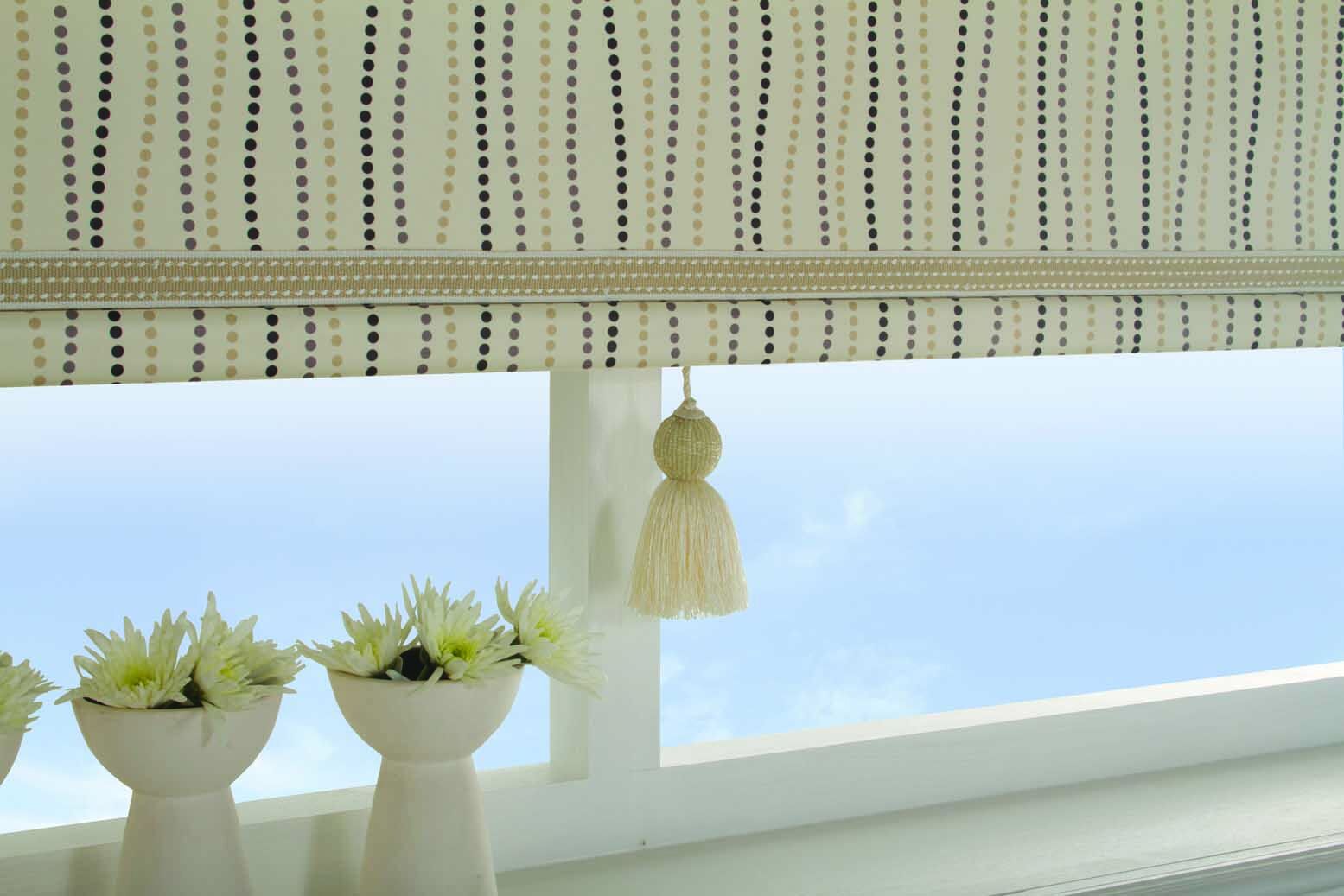
Angled walls are common in loft conversions, rooms with vaulted ceilings, or spaces where a wall meets a roof slope. Windows in these areas are often fixed into the slope itself, creating a parallelogram or trapezoid shape rather than a simple rectangle. Standard blinds cannot handle such shapes because their top and bottom edges are not parallel. A custom blind, however, can be cut and hemmed to follow the slope exactly, whether it is a roller blind, a Roman blind, or a pleated blind. The mounting method also matters: for a window set into a sloping ceiling, you might need brackets that attach to the frame or to the slope itself, rather than to a vertical wall.
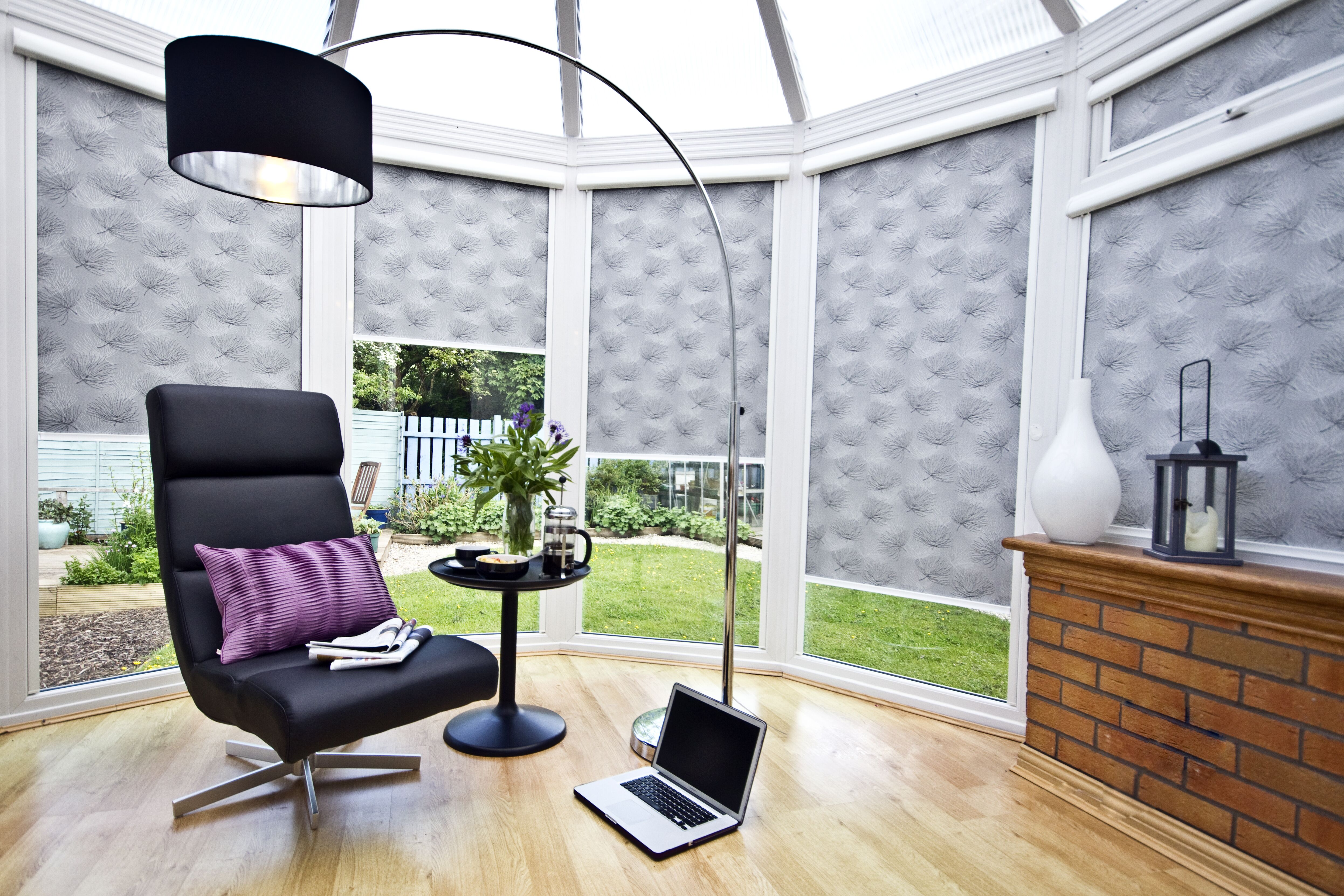
Another common angled space is a corner window that wraps around a 90-degree or obtuse angle. Here, the blind needs to cover two or more planes that meet at a corner. A single continuous blind is possible with a corner connector track, but the join must be precise to avoid gaps or bunching. Alternatively, separate blinds for each face can be fitted, and if they are made to the same fabric and style, the visual effect is still cohesive.
Types of blinds that suit these spaces
Not every blind style is suited to a bay or an angled opening. The most versatile options include:
- Roller blinds, particularly good for individual panes in a bay, as they can be cut to exact width and length. They also work well on sloping ceilings if you use a tensioned system or a side-winder mechanism that prevents the fabric from sagging.
- Roman blinds, these fold up into soft pleats and can be made to fit non-rectangular shapes by adjusting the hem line. They add a touch of elegance to a bay window but need careful measuring to ensure the folds sit evenly.
- Pleated blinds, these are ideal for angled windows because the fabric itself can be shaped to a trapezoid or parallelogram. They also offer good insulation and light control, and they can be fitted flush to the glass for a minimal look.
- Vertical blinds, a good choice for large bay windows or patio doors that form part of the bay. The slats can be rotated to control light and privacy, and the track can be cut to the exact length needed for each section.
- Curved-track blinds, for a true curved bay, a bespoke curved track allows a single curtain or blind to follow the arc. This works well with pinch-pleat curtains or with a specially made blind that slides along the curve.
Each of these styles can be ordered as bespoke window blinds, meaning they are manufactured to your exact dimensions after a professional measurement has been taken. That is crucial: even a small error in the angle or the width can leave a gap that lets in light or looks unsightly.
How to measure a bay window for blinds
Measuring a bay window for blinds is not as simple as measuring a standard window. You need to measure each face separately, including the width at the top, middle, and bottom (because the frame may not be perfectly square), as well as the height on both sides. For an angled bay, you also need to measure the angle between each pair of adjacent faces. That angle determines how the brackets must be positioned and whether a standard bracket or a specialist angled bracket is required.
If you are fitting the blind inside the recess, measure the width at the top and bottom of each pane, and take the smaller of the two measurements. For an outside-recess fit, measure the full width you want the blind to cover, including any overlap beyond the frame. Then note the height from the top of the fitting point to the sill or the bottom of the window. For a sloping ceiling window, measure the length of each side and the width at the top and bottom, then indicate the slope angle.

Because the margin for error is small, many homeowners choose to have a professional survey done. That is where the phrase "blinds fitted. blind fitters, blinds fitted near me" comes in, a local company that offers both measuring and installation can ensure the blinds are made to the correct dimensions and fitted without gaps. That approach saves time and avoids the frustration of ordering a blind that does not quite fit.
Practical considerations for angled spaces
When choosing blinds for an angled space, think about how the blind will be operated. A window that slopes at a steep angle may be hard to reach at the top, so a corded or motorised option might be preferable. For a bay window with a deep sill, you might need to consider whether the blind will knock against objects on the sill when it is raised or lowered. Also, think about light control: a bay window often lets in light from three directions, so you may want to choose a fabric that filters light evenly or one that provides full blackout for a home cinema or bedroom.
Another factor is the type of window handle. A protruding handle can interfere with a roller blind or a Roman blind if the blind is fitted inside the recess. In that case, you might need to fit the blind outside the recess, or choose a style like a pleated blind that sits closer to the glass. For a French door or a patio door that is part of a bay, you need a blind that can be drawn fully to one side to allow the door to open, so vertical blinds or panel blinds are often the best choice.
Why bespoke is almost always the answer
Standard blinds are manufactured in fixed widths and lengths, and they assume a rectangular opening with square corners. A bay window or an angled wall breaks those assumptions, so a standard blind will either leave gaps, require trimming that damages the fabric, or simply not fit at all. Bespoke window blinds are made to the exact measurements of your opening, and they can accommodate angles, curves, and non-parallel edges. The extra cost is usually modest compared to the frustration of a poorly fitting blind, and the result looks like it was designed for the space, which it was.
Many local suppliers, such as those in Derbyshire and nearby areas, offer a complete service from measuring to fitting. They will visit your home, take the measurements themselves, and advise on the best style for your particular bay or angled window. That service is particularly valuable for complex shapes, because the fitter can see the space and note any quirks, like an uneven ceiling or a radiator that sits below the window, that might affect the choice of blind.
If you are planning to update the window coverings in a bay window or an angled room, the most reliable path is to work with a supplier who provides made-to-measure products and professional installation. The phrase "blinds fitted. blind fitters, blinds fitted near me" sums up exactly that: a local team that can handle the entire job, from the initial consultation to the final fitting, so you end up with blinds that look great and work smoothly for years.
Final checks before ordering
Before you commit to a particular blind or supplier, make sure you have a clear idea of the style, colour, and fabric, and that the measurements have been double-checked. If you are fitting the blinds yourself, use a spirit level and a good tape measure, and measure each pane or section three times. If you are using a professional fitter, ask them to confirm the dimensions and the type of brackets needed. With the right preparation and a bespoke approach, even the most awkward window space can be turned into a striking feature of the room.